What does the nervous system do?
It helps you notice what is happening, think and move. It also controls tasks you do not have to think about, such as digestion. Messages travel through nerve cells using electrical and chemical signals.
The brain and spinal cord form its central part, called the central nervous system. Nerves outside them connect this centre with the rest of the body. They belong to the peripheral nervous system. Read the NICHD explanation.
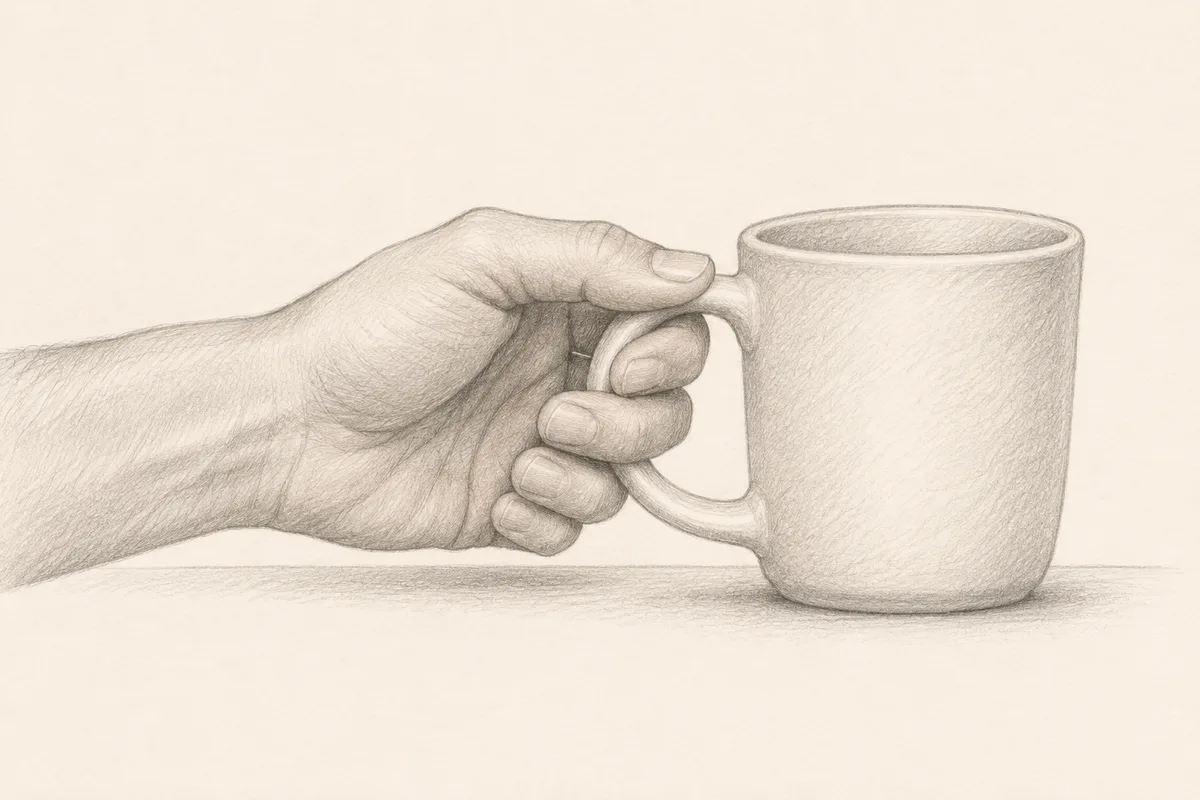
What happens when you pick up a cup?
You see the cup and decide to reach for it. Signals travel from your brain towards the muscles in your arm and hand. Information from touch helps you judge your grip. Movement and sensation work together; messages do not only travel one way. NICHD explains movement and sensory signals.
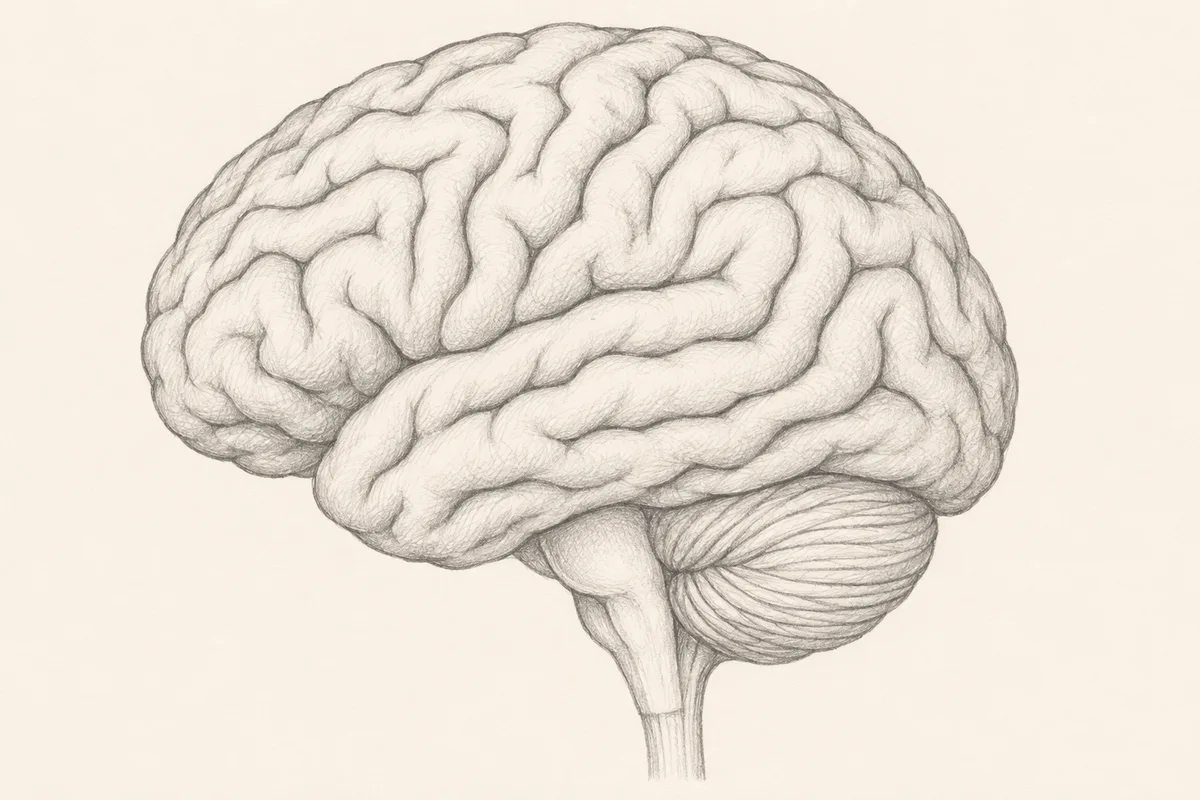
Which parts of the brain can you recognise?
- The large, folded part, the cerebrum, helps you think, remember and make deliberate movements.
- The smaller part at the back, the cerebellum, helps coordinate movement.
- The brainstem connects to the spinal cord and helps control breathing and heartbeat.
These parts work together. See the OpenStax explanation of the brain.
What sits deeper inside?
The corpus callosum connects the brain's two halves. The thalamus helps pass on and process information: explore its left and right parts. The hypothalamus helps keep conditions inside the body balanced. Source: OpenStax.
Is the spinal cord the same as the backbone?
No. The backbone is made of bones. The spinal cord is soft nervous tissue inside it. It carries messages and helps produce quick, automatic responses called reflexes. In adults, it ends above the bottom of the backbone.
A cross-section shows grey matter shaped roughly like an H. White matter around it contains pathways carrying signals to and from the brain. Read about the spinal cord in OpenStax.
Try it in 3D
- Open the Nervous system layer. Rotate the model to see the brain and the cord components below it.
- Turn on Bones to compare their positions with the skull and backbone.
- Select a part and use Isolate to see it on its own. Show context brings back the surrounding model.
Explore the four spinal-cord components
These are the names used in the model. Each link opens one component on its own, not a complete spinal cord.
What this model cannot show yet
The model now includes selected nerves in the arms, legs and trunk, root and ganglion groups, sympathetic components, and more internal brain and spinal-cord structures. Try the median nerve in the left arm, sciatic nerve on the left, or the cauda equina nerve-root group.
This is still not the whole nervous system. Some source objects combine several branches, and many coverings, cranial nerves and connections remain incomplete. Colours are illustrative. Source surfaces can have gaps or overlap, including contacts with ribs and the sacrum. The model does not show signals travelling or diagnose health problems.
Sources and model records
NICHD: What are the parts of the nervous system? · OpenStax Anatomy and Physiology 2e, section 13.2.
3D geometry: Z-Anatomy / DBCLS, CC BY-SA 4.0. Credits · New source objects and limitations · Earlier brain surfaces.
Peripheral and internal nervous-system additions: sources and limitations (TXT).