Overview
What is the heart?
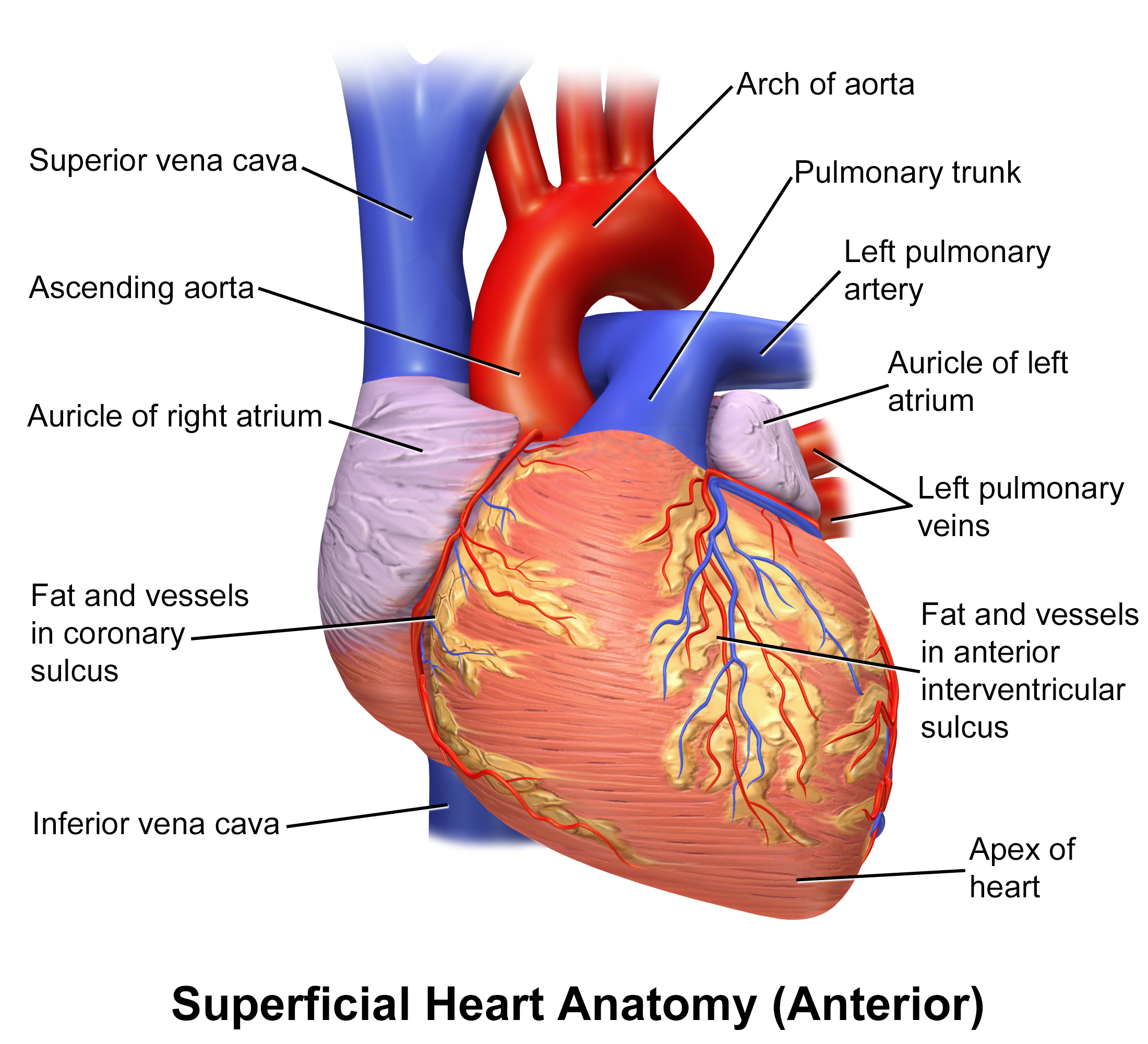
The heart is a hollow muscular organ enclosed by the pericardium. Its coordinated contractions generate the pressure that moves blood through the lungs and the rest of the body.
A muscular septum separates the right and left sides. Each side contains a receiving chamber called an atrium and a pumping chamber called a ventricle.
Four chambers
Right atrium and ventricle
The right atrium receives systemic venous blood. The right ventricle then pumps it through the pulmonary trunk toward the lungs.
Left atrium and ventricle
The left atrium receives oxygenated blood from the pulmonary veins. The thick-walled left ventricle ejects it into the aorta.
Valves and blood flow
The tricuspid, pulmonary, mitral, and aortic valves prevent backward flow. Their opening and closing respond to pressure changes created during the cardiac cycle.
Blood supply
The right and left coronary arteries arise from the ascending aorta and supply the myocardium. Cardiac veins return most venous blood to the right atrium through the coronary sinus.